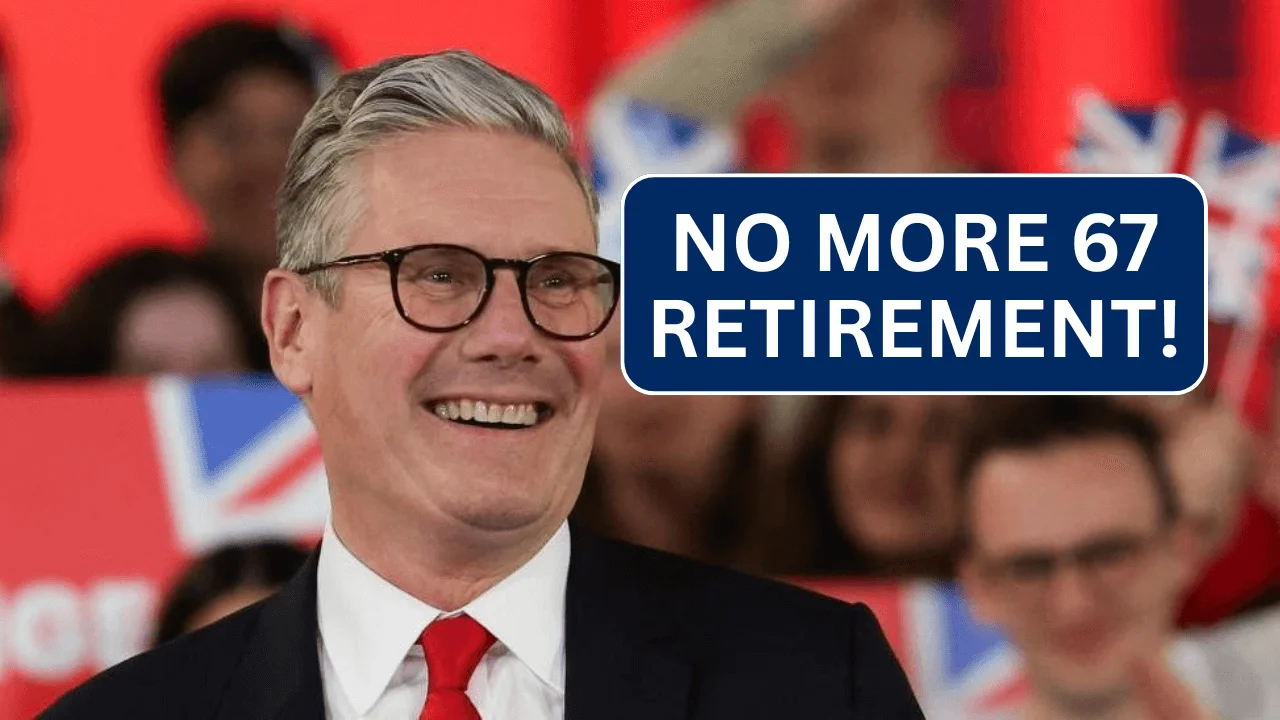
For years, many people across the UK have built their retirement plans around a simple number: 67. It became widely accepted as the age at which most working adults would begin receiving their State Pension.
However, with the government formally approving long‑term changes to the State Pension age, retiring at 67 will no longer apply to everyone. The direction of travel is clear — the qualifying age is set to rise beyond 67 for future retirees.
For some, the impact will be minimal. For others, particularly those in mid‑life or younger, the change could reshape long‑term financial planning.
Here’s a clear and practical guide to what has been approved, who is affected, and what it means for your retirement.
What Is the Current State Pension Age
The State Pension age is currently 66 for both men and women.
Legislation already in place confirms that it will rise to 67 between 2026 and 2028, depending on your date of birth.
But that is not the end of the story.
The government has also approved a further increase to 68, meaning that 67 will not remain the long‑term retirement benchmark.
What Has the Government Approved
Under existing law, the State Pension age will increase to 68 between 2044 and 2046.
However, official reviews have examined whether that timetable could be brought forward depending on life expectancy trends and public finances.
While no immediate acceleration has been confirmed for all age groups, the approval of a rise to 68 makes it clear that retiring at 67 will not apply to everyone currently in the workforce.
For many people in their 40s or younger, the State Pension age is likely to be 68.
Why the Pension Age Is Rising
There are two main reasons behind the increase.
First, people are living longer. Over the past few decades, life expectancy has risen significantly. That means pensions are paid for more years per person.
Second, the ratio of working‑age people to retirees has fallen. Fewer workers are contributing through taxes while more people draw pension income.
To maintain financial sustainability, governments gradually increase the qualifying age.
Without such changes, the cost of the State Pension would rise sharply.
Who Will Be Affected
If you are already close to retirement, the increase to 68 may not apply to you.
If you are currently in your late 40s or early 50s, however, it could directly impact your retirement timeline.
Younger workers should assume that 68 may be their State Pension age — and possibly higher in future decades if further reviews recommend changes.
Your exact pension age depends on your date of birth, which you can check through your official forecast.
Does This Mean You Cannot Retire at 67
No.
The State Pension age determines when you can claim your government pension — not when you must stop working.
You are free to retire earlier if you have sufficient private savings, a workplace pension or other income sources.
However, if you stop working before reaching State Pension age, you will not receive the State Pension until you qualify.
That gap must be funded from other income.
The Financial Impact of Waiting an Extra Year
The full new State Pension is worth more than £200 per week.
Over a year, that adds up to more than £10,000.
If the State Pension age increases from 67 to 68, individuals would need to cover that year’s living costs independently.
For those without substantial private pensions, this could significantly affect retirement plans.
The Role of the Triple Lock
Although the qualifying age is rising, the value of the State Pension continues to be protected by the triple lock.
The triple lock guarantees that payments increase each year by the highest of:
Inflation
Average earnings growth
2.5 percent
In recent years, this has resulted in notable annual increases.
While eligibility may be delayed, the weekly amount has also grown.
Workplace and Private Pensions
Most workplace pensions can currently be accessed from age 55, rising to 57 from 2028.
This means some people may retire before reaching State Pension age by drawing from private pension pots.
However, withdrawing funds early can reduce long‑term income sustainability.
Balancing private pension access with State Pension timing is crucial.
Health and Work Considerations
One major concern around raising the State Pension age is health.
Not everyone is physically able to continue working into their late 60s.
Those in physically demanding roles may face greater challenges.
While other benefits exist for those unable to work due to illness or disability, they are separate from the State Pension system.
This remains one of the most debated aspects of pension reform.
Why Reviews Continue
The State Pension age is subject to periodic review.
These reviews consider:
Life expectancy data
Public finances
Economic growth
Workforce participation
If life expectancy growth slows, further increases may be delayed.
If public spending pressures intensify, future rises could be considered.
The system is designed to adapt over time.
Public Reaction
Changes to retirement age often generate strong public reaction.
For many, retirement planning is deeply personal and based on decades of financial decisions.
Even a one‑year increase can feel significant.
Past changes have led to campaigns arguing that some groups were not given enough notice.
As a result, the government now emphasises phased implementation and advance communication.
Planning for a Later Retirement
If you are under 55, it is wise to assume that your State Pension age may be 68 or beyond.
Practical steps include:
Reviewing your State Pension forecast
Increasing workplace pension contributions
Building additional savings
Reducing debt before retirement
Even small increases in contributions today can compound significantly over time.
Can You Defer the State Pension
If you reach State Pension age but choose not to claim immediately, you can defer.
For every nine weeks you delay, your pension increases slightly.
Over time, this can boost your weekly payment.
However, deferral only benefits those who expect to live long enough to gain from the higher amount.
It does not replace the income lost during the waiting period.
International Perspective
The UK is not alone in raising retirement ages.
Many developed countries have moved toward pension ages of 67 or 68 in response to ageing populations.
The trend reflects global demographic changes rather than a uniquely British decision.
How to Check Your Personal Pension Age
You can check your State Pension age and forecast online through official government services.
Your forecast will show:
Your State Pension age
Your estimated weekly amount
Your National Insurance contribution record
Reviewing this information gives clarity and allows you to plan more effectively.
Key Points to Remember
The State Pension age is currently 66.
It will rise to 67 between 2026 and 2028.
Legislation provides for a future rise to 68.
Retiring at 67 will not apply to everyone.
Planning early can reduce financial pressure later.
Final Thoughts
Saying goodbye to retiring at 67 may feel unsettling, particularly for those who had structured long‑term plans around that milestone.
However, the shift reflects broader demographic realities and long‑term sustainability planning.
The State Pension remains a cornerstone of retirement income in the UK. While the qualifying age is rising, annual increases under the triple lock continue to protect its value.
Ultimately, while you cannot control the official pension age, you can control how you prepare for it.
Staying informed, reviewing your forecast and building flexible retirement savings will ensure you remain ready for whatever timeline applies to you.
Retirement at 67 may no longer be universal — but with thoughtful planning, financial security in later life remains firmly within reach.