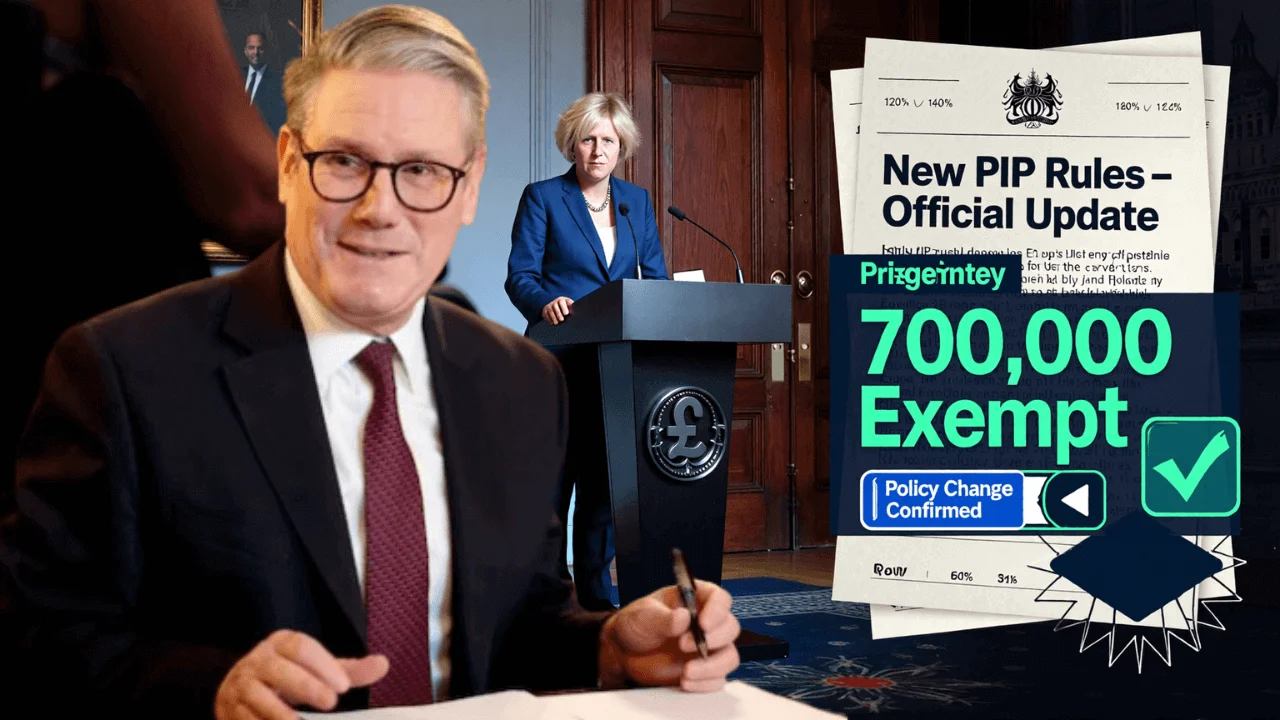
The UK’s disability benefits system is facing one of its most significant reviews in years. With proposals linked to new Personal Independence Payment (PIP) rules reportedly set to exempt up to 700,000 people from certain reassessment requirements, many claimants and families are asking what this actually means in practice.
For disabled people who rely on support to manage daily living and mobility costs, any change can feel unsettling. At the same time, reforms aimed at reducing stress and unnecessary reassessments could offer relief to thousands.
Here’s a clear, balanced and practical guide explaining what the proposed PIP overhaul involves, who may be exempt and what claimants should expect next.
What Is PIP
Personal Independence Payment is a non‑means‑tested benefit designed to help people aged 16 and over with the extra costs of living with a long‑term health condition or disability.
It has two components:
Daily Living
Mobility
Each component can be paid at either a standard or enhanced rate depending on how a condition affects everyday life.
Importantly, PIP is not based on income or employment status. Many recipients work while receiving it.
Why Reform Is Being Proposed
The disability benefits system has long faced criticism over:
Lengthy reassessment cycles
Stressful assessment processes
Appeal backlogs
Inconsistent decision‑making
Advocates argue that people with lifelong or degenerative conditions should not face repeated reassessments when their circumstances are unlikely to improve.
Proposals under discussion aim to reduce unnecessary reviews for certain groups, potentially exempting around 700,000 claimants from routine reassessment.
What “Exempt” Could Mean
The word “exempt” does not mean losing benefits. In this context, it refers to exemption from regular reassessments.
Currently, PIP awards are often time‑limited, even for conditions that are permanent.
Under the new approach, some individuals could receive:
Longer award periods
Ongoing awards with light‑touch reviews
Reduced paperwork requirements
For many, this could remove years of anxiety associated with repeat assessments.
Who Might Qualify for Exemption
Although final eligibility rules would need formal confirmation, likely groups include:
People with severe lifelong disabilities
Claimants with progressive neurological conditions
Individuals with profound learning disabilities
Those already awarded enhanced rates on long‑term evidence
Conditions that are medically unlikely to improve may be prioritised for longer awards.
The Department for Work and Pensions would determine criteria based on medical evidence and claim history.
What Will Not Change
PIP remains non‑means‑tested.
Working does not automatically affect eligibility.
The points‑based assessment system for daily living and mobility activities remains central to decision‑making.
The proposed reform focuses more on review frequency rather than changing eligibility thresholds.
How Many People Could Be Affected
Reports suggest that up to 700,000 people could move to longer‑term or ongoing awards under revised rules.
This would represent a substantial share of existing claimants.
Reducing reassessment pressure may also ease strain on assessment providers and appeal systems.
Impact on Current Claimants
If you already receive PIP, you do not need to reapply because of these proposals.
If new rules are implemented, the DWP would contact affected individuals directly.
Those with short review periods may see future awards extended under revised guidance.
Will Assessments Disappear Completely
No.
New claimants would still undergo assessment.
Periodic checks may still occur in some cases to confirm ongoing entitlement.
However, the goal appears to be shifting from routine reassessment to more targeted reviews where change is likely.
How This Relates to Other Benefits
Many people who receive PIP also claim:
Employment and Support Allowance
Universal Credit
Changes to PIP reassessment rules would not automatically alter eligibility for these benefits, as each has its own criteria.
However, smoother PIP processes could indirectly reduce stress across the broader support system.
Concerns and Criticism
While many welcome reduced reassessments, some advocacy groups caution that details matter.
Key concerns include:
Whether exemption criteria will be narrow
How decisions will be reviewed
Risk of inconsistencies between regions
Transparency will be crucial to maintain trust.
Financial Implications
Disability benefits represent a significant portion of public spending.
Reforms must balance claimant wellbeing with budget considerations.
Extending long‑term awards could reduce administrative costs associated with frequent reassessments.
However, it may also reduce opportunities to reassess eligibility where conditions improve.
What This Means for New Applicants
If you are applying for PIP after reforms take effect, your award length may depend on:
Medical evidence provided
Nature of your condition
Prognosis from healthcare professionals
Those with permanent or degenerative conditions may benefit most from longer awards.
Will Payment Rates Change
The overhaul primarily concerns assessment frequency rather than payment levels.
PIP payment rates are uprated annually, typically in line with inflation.
Any future rate increase would be announced separately through standard uprating processes.
Appeals and Mandatory Reconsiderations
The right to challenge decisions remains unchanged.
If a claimant disagrees with a decision, they can request:
Mandatory reconsideration
Appeal to an independent tribunal
Reduced reassessments may lower the number of appeals over time.
Mental Health Claimants
Many people receiving PIP for mental health conditions have faced frequent reviews.
If exemption criteria include long‑term severe mental health conditions, this could offer significant relief.
However, detailed eligibility rules will determine how widely exemptions apply.
Timeline for Implementation
Major benefit reforms require:
Policy confirmation
Legislative changes if necessary
Updated DWP guidance
Training for assessors
Implementation would likely occur in phases rather than overnight.
Claimants would receive formal communication before any personal changes take effect.
What Claimants Should Do Now
At present, there is no need to take immediate action.
If you are due for reassessment, continue to follow existing procedures.
Keep medical evidence up to date.
Monitor official announcements rather than relying on social media speculation.
Common Questions
Will I automatically be exempt
Only if your condition meets the confirmed criteria.
Will my PIP stop
No, the proposal concerns reassessments, not removal of support.
Do I need to apply for exemption
No formal application process has been announced.
When will changes start
A confirmed timeline would be published once policy is finalised.
Key Points to Remember
The overhaul focuses on reassessment frequency.
Up to 700,000 people may receive longer awards.
Eligibility criteria are still subject to confirmation.
Payment rates remain separate from reassessment rules.
Official communication will clarify individual cases.
Final Thoughts
For many disabled people, the stress of repeated PIP reassessments has been as challenging as the financial uncertainty itself. If new rules lead to 700,000 people receiving longer or ongoing awards, it could represent a meaningful shift towards stability.
However, until final policy details are confirmed, it is important to approach headline figures cautiously.
The aim appears to be a system that better recognises permanent and degenerative conditions — reducing administrative burden without undermining support.
As always, claimants should rely on official updates from the Department for Work and Pensions and avoid unverified claims circulating online.
If implemented carefully, the proposed reforms could mark a significant step towards a more compassionate and consistent disability benefits system in the UK.