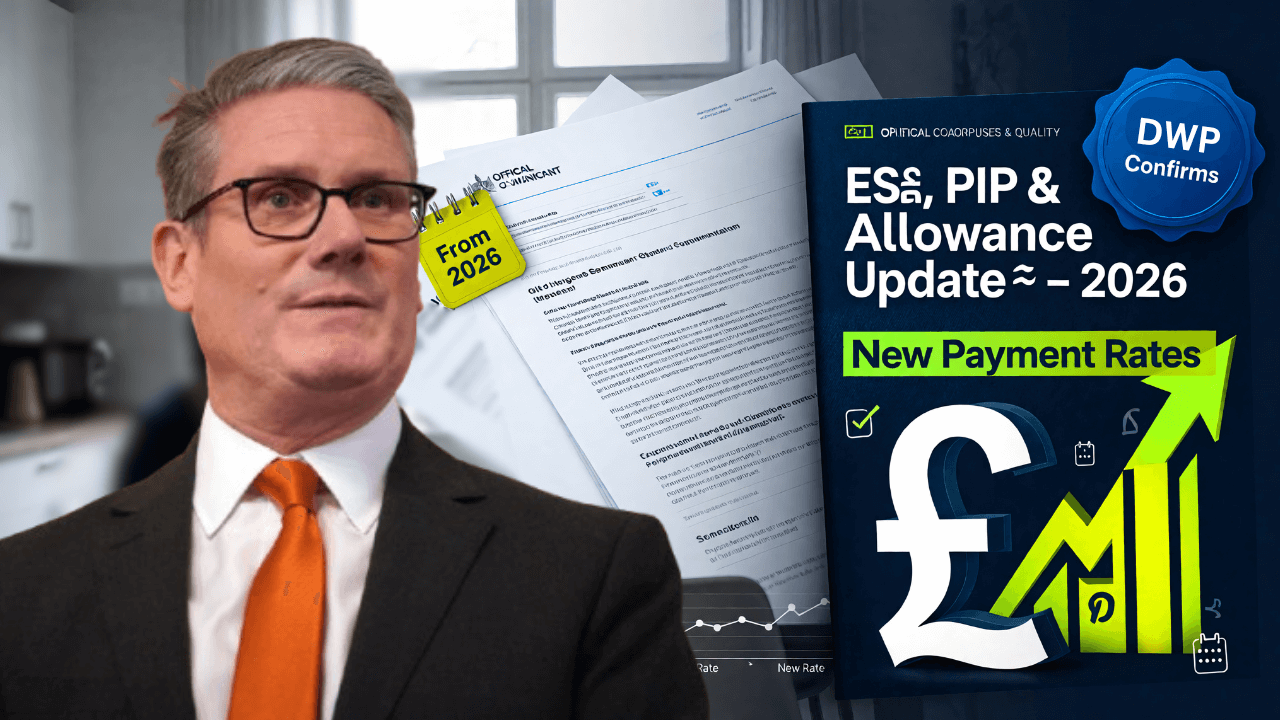
The UK disability benefits system is set for updated payment rates in 2026, following confirmation from the Department for Work and Pensions. For millions of households who rely on financial support due to illness, disability or limited ability to work, these annual upratings are crucial.
With rising living costs and continued economic pressures, even small weekly increases can make a noticeable difference. But what exactly is changing in 2026? Which benefits are affected? And how will the new rates apply to you?
Here’s a clear and practical guide explaining the updated ESA, PIP and related allowance rates for 2026, written for UK readers who want straightforward information without confusion.
Why Disability Benefit Rates Change Each Year
Most UK working‑age and disability benefits are reviewed annually. Increases are usually linked to inflation, typically measured using the Consumer Prices Index (CPI) from the previous September.
When inflation rises, benefit rates are adjusted to help protect the real value of payments. This ensures that support keeps pace, at least partially, with the cost of essentials such as food, energy and housing.
The 2026 update reflects this annual uprating process rather than a structural reform of disability benefits.
Personal Independence Payment in 2026
Personal Independence Payment, commonly known as PIP, remains one of the key disability benefits in the UK.
PIP is not means‑tested and is designed to help with the extra costs of living with a long‑term physical or mental health condition. It has two components:
Daily Living
Mobility
Each component is paid at either a standard or enhanced rate, depending on how your condition affects you.
For 2026, both standard and enhanced rates are set to increase in line with annual uprating.
The Daily Living component provides support for tasks such as preparing food, washing, dressing and managing medication.
The Mobility component supports those who have difficulty moving around or planning journeys.
The new rates apply automatically — there is no need to reapply to receive the increased amount.
Employment and Support Allowance in 2026
Employment and Support Allowance (ESA) supports individuals who are unable to work due to illness or disability.
ESA includes different phases:
Assessment phase
Work‑Related Activity Group
Support Group
For 2026, ESA rates are also increasing in line with inflation.
Those in the Support Group, who are not expected to prepare for work, will see their weekly payment rise accordingly.
Contribution‑based ESA and income‑related ESA are both affected by uprating.
If you currently receive ESA, your updated payment should be reflected automatically from the start of the new financial year.
Universal Credit and Disability Elements
Although this update focuses on ESA and PIP, many disabled claimants now receive Universal Credit instead of legacy benefits.
Universal Credit includes additional elements for people with limited capability for work and work‑related activity.
These elements are also increasing in 2026 under the same uprating principles.
If you have been migrated from ESA to Universal Credit, your overall entitlement may include similar disability components within the UC structure.
Attendance Allowance Updates
Attendance Allowance supports people over State Pension age who need help with personal care due to illness or disability.
It has two rates:
Lower rate
Higher rate
For 2026, both rates are being increased.
Attendance Allowance is not means‑tested and does not depend on National Insurance contributions.
If you are eligible, the uprated amount will be applied automatically.
Carer’s Allowance Increase
Carers who provide at least 35 hours of care per week may receive Carer’s Allowance.
This allowance is also subject to annual uprating.
The weekly rate will increase in 2026, though carers must remain within the earnings threshold to continue qualifying.
If your earnings increase beyond the limit, you may lose entitlement, so it is important to monitor income carefully.
How Much Will Payments Increase
The exact increase depends on the inflation rate used for uprating.
For example, if inflation stands at around 6 percent, a £100 weekly benefit could rise by approximately £6 per week.
Over a year, that equates to more than £300 extra.
While the increases may appear modest weekly, they accumulate meaningfully across 12 months.
Your official award letter will confirm the precise new rate.
Do You Need to Apply for the Increase
No.
If you are already receiving ESA, PIP, Attendance Allowance or Carer’s Allowance, the uprated amount is applied automatically.
There is no need to complete new forms.
Payments usually change at the beginning of the new tax year in April.
If your payment does not increase as expected, contact the DWP directly.
Assessment Rules Remain the Same
It is important to understand that the 2026 update relates to payment amounts, not eligibility criteria.
The assessment processes for PIP and ESA remain unchanged.
PIP continues to use a points‑based system assessing daily living and mobility activities.
ESA assessments still determine whether you are placed in the Work‑Related Activity Group or Support Group.
No automatic reassessment occurs solely because of annual uprating.
Impact on Means‑Tested Benefits
For those receiving means‑tested benefits, increases in disability payments may affect overall entitlement calculations.
However, disability components are often treated separately within benefit assessments.
If you receive Housing Benefit, Pension Credit or Universal Credit, it is worth reviewing how the uprated amounts interact with your total award.
Payment Dates in 2026
Disability benefits are usually paid every four weeks.
Payment dates may shift slightly around bank holidays.
If your usual payment date falls on a bank holiday, you will typically receive your money earlier.
The DWP publishes updated payment schedules each year.
Tax and Disability Benefits
PIP and Attendance Allowance are tax‑free.
ESA may be taxable depending on your circumstances, particularly if you receive contribution‑based ESA alongside other income.
Always review your tax code if your income changes significantly.
Protecting Yourself From Scams
Whenever benefit updates are announced, scammers often attempt to exploit confusion.
Remember:
The DWP will not ask for bank details by text message.
You do not need to “apply” for annual uprating.
Official letters will come through secure channels.
If unsure, contact official helplines directly.
Key Points to Remember
Disability benefits are increasing in 2026.
PIP, ESA, Attendance Allowance and Carer’s Allowance are included.
Increases are linked to inflation.
Payments update automatically.
Eligibility rules remain unchanged.
What This Means for Claimants
For most claimants, the 2026 changes bring modest but welcome increases in weekly income.
While uprating does not solve all cost‑of‑living challenges, it helps maintain purchasing power over time.
The most important step is ensuring your details remain up to date with the DWP and that you understand which benefit components apply to your situation.
Final Thoughts
The confirmation of new disability benefit rates for 2026 reflects the standard annual uprating process rather than a major reform of the system.
For those relying on ESA, PIP and related allowances, the increases provide additional support as living costs continue to evolve.
If you currently receive disability benefits, you do not need to take action. Your payments will adjust automatically.
If you believe you may be eligible but are not currently claiming, reviewing official guidance or seeking independent advice could help ensure you receive the support you are entitled to.
Staying informed about updates and understanding how your benefit is structured remains the best way to manage your financial planning in 2026 and beyond.