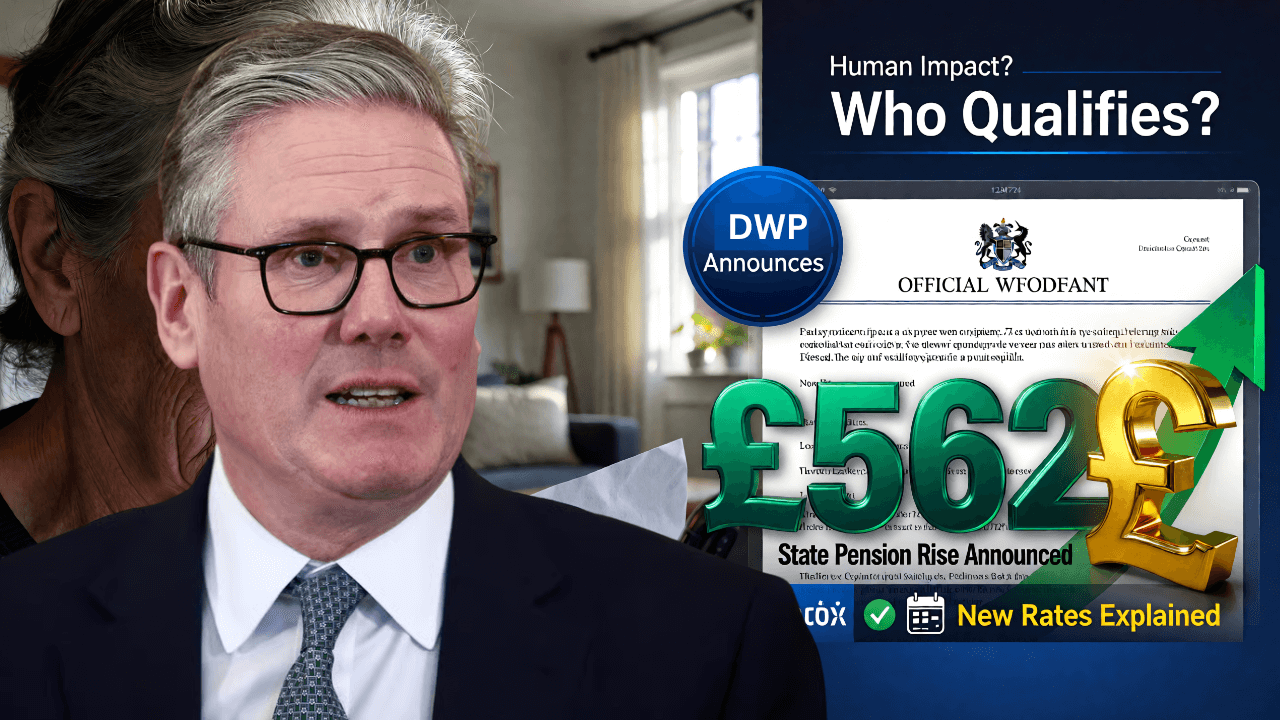
News of a £562 State Pension rise has caught the attention of millions of retirees across the UK. For households relying on fixed incomes, even a modest annual increase can make a real difference — particularly at a time when energy bills, food costs and everyday essentials remain higher than many would like.
But what exactly does the £562 figure represent? Is it a one‑off payment or a permanent increase? Who qualifies? And when will it appear in bank accounts?
Here’s a clear and practical guide explaining what the increase means, how it works and who can expect to benefit.
What the £562 Increase Refers To
The £562 figure refers to an annual increase in the full new State Pension following the latest uprating decision.
Rather than a lump‑sum payment, this reflects the total yearly boost many pensioners will see as a result of percentage increases applied to weekly pension rates.
Because the State Pension is paid weekly (or every four weeks), small weekly increases add up over the course of a year — resulting in a total gain that can approach or exceed £562 depending on entitlement level.
Why the State Pension Is Rising
Each year, the State Pension is reviewed under what is known as the “triple lock” policy. This guarantees that payments rise by the highest of:
Average earnings growth
Inflation
2.5 percent
When one of these measures rises sharply, pension payments follow.
The latest increase reflects strong wage growth figures used in the uprating calculation.
The policy is administered by the Department for Work and Pensions.
How Much the Weekly Pension Is Now
The full new State Pension increases by a set weekly amount.
For someone receiving the full entitlement, the weekly rise translates into roughly £10–£11 more per week compared with the previous year.
Over 52 weeks, this equates to around £562 extra annually.
Those receiving the basic (pre‑2016) State Pension also see an increase, though the total annual uplift may differ depending on individual circumstances.
Is It a One‑Off Payment
No.
The £562 is not a one‑time bonus. It represents a permanent increase to the weekly pension rate.
That means the higher amount continues in future years and forms the base for future upratings.
This distinction is important — it is not a temporary cost‑of‑living support payment.
Who Qualifies for the Increase
Anyone already receiving the State Pension will benefit from the uprated amount automatically.
Eligibility includes:
Men and women who have reached State Pension age
Those receiving the full new State Pension
Those receiving the basic State Pension
Individuals with partial entitlement based on National Insurance contributions
There is no need to apply for the increase.
Payments adjust automatically from the start of the new financial year.
When the Higher Payments Begin
State Pension increases typically take effect in April at the start of the new tax year.
Recipients usually see the updated amount reflected in payments shortly after that date, depending on their payment schedule.
If your payment date falls later in the month, you may notice the increase then.
What If You Do Not Receive the Full Amount
Not everyone receives the full new State Pension.
Your entitlement depends on your National Insurance record.
To receive the full amount, you generally need 35 qualifying years of National Insurance contributions.
If you have fewer years, your pension is reduced proportionally.
Even so, any uprating still applies to your current amount.
Impact on Pension Credit
Some lower‑income pensioners receive Pension Credit.
When the State Pension rises, Pension Credit thresholds also usually increase to ensure continued support.
However, because Pension Credit is means‑tested, the net financial benefit may vary depending on household income.
If you are unsure how the rise affects you, checking your Pension Credit calculation is sensible.
Will the Increase Be Taxed
The State Pension counts as taxable income.
If your total income exceeds the Personal Allowance threshold, you may pay income tax on the amount above that limit.
However, tax is not deducted directly from State Pension payments.
Instead, it is usually collected through PAYE adjustments on other income sources, such as private pensions.
If the increase pushes your total income above the threshold, you may notice changes in your tax code.
Effect on Other Benefits
In most cases, the State Pension increase does not reduce entitlement to unrelated benefits.
However, because it counts as income, it can affect means‑tested support.
Examples include:
Housing Benefit
Council Tax Reduction
Pension Credit
Each case depends on individual circumstances.
What About Deferred Pension
If you previously chose to defer claiming your State Pension, your payments may already be higher than the standard rate.
The uprating still applies to your current amount.
Deferral increases are separate from annual triple lock adjustments.
Why the Increase Matters
For many retirees, the State Pension forms the backbone of retirement income.
An additional £562 per year can help cover:
Rising grocery bills
Energy costs
Transport expenses
Healthcare needs
While it may not transform household finances, it offers meaningful support.
Long‑Term Sustainability Debate
The triple lock policy remains politically debated.
Supporters argue it protects pensioners from inflation and falling behind working incomes.
Critics question long‑term affordability, particularly as the population ages.
For now, the government has confirmed the policy remains in place.
What You Should Do
Most pensioners do not need to take action.
However, it’s wise to:
Check your updated payment amount
Review your tax code
Ensure your bank details are correct
Monitor your annual pension statement
If your payment does not reflect the expected increase, contact the DWP for clarification.
Common Questions
Is the £562 paid in one lump sum
No, it reflects the annual total increase.
Do I need to apply
No, it is automatic.
Will everyone get exactly £562
Only those receiving the full new State Pension. Others receive proportional increases.
When will I see the rise
From April, depending on your payment date.
Key Points to Remember
The £562 represents an annual uplift.
It is part of the triple lock uprating.
Payments adjust automatically.
Tax may apply depending on total income.
The increase becomes part of your permanent pension rate.
Final Thoughts
The confirmed £562 annual State Pension rise offers welcome reassurance for many older households.
While not a windfall, it reflects the continued application of the triple lock — ensuring pensions rise in line with economic conditions.
For most recipients, the increase will arrive automatically, without paperwork or applications.
As always, keeping an eye on your payment schedule and tax position helps ensure everything runs smoothly.
In a time of economic uncertainty, even incremental increases matter. For millions of pensioners across the UK, this latest uplift provides a modest but steady boost to everyday financial stability.