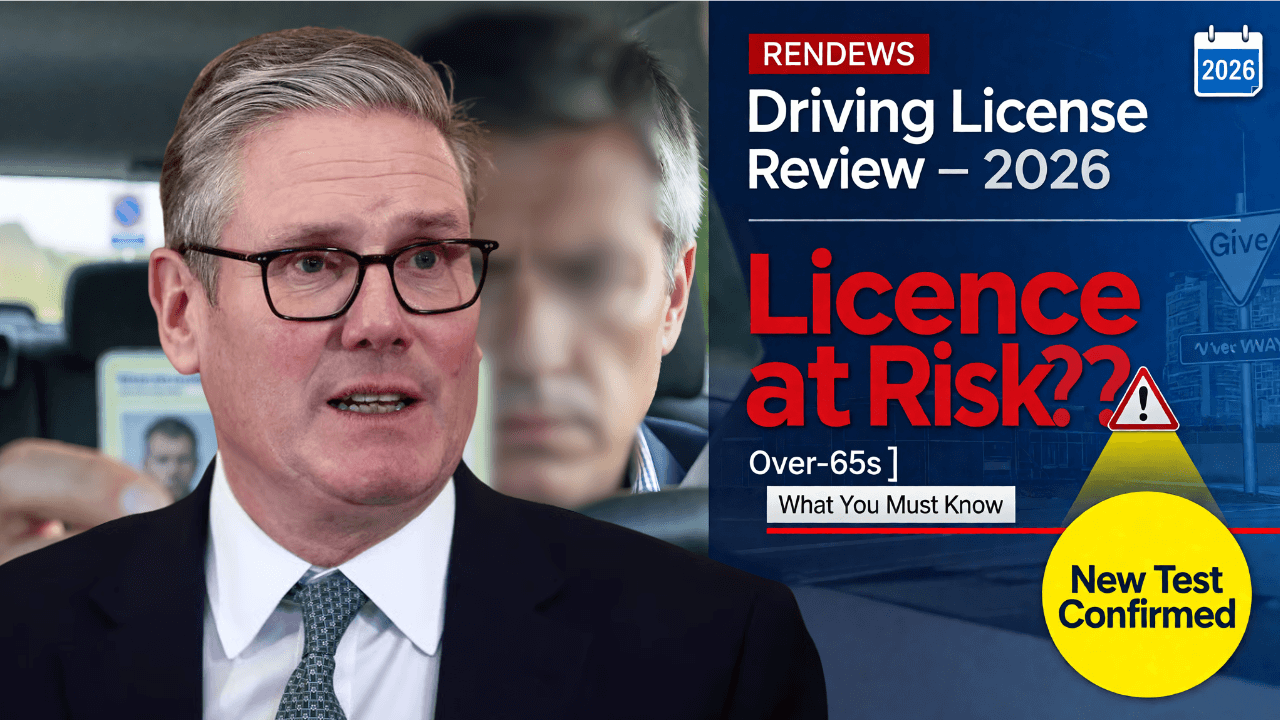
Reports of a new 2026 driving test for motorists over 65 have sparked widespread concern, particularly among older drivers who rely on their cars for independence, shopping, medical appointments and visiting family.
Any suggestion that a licence could be “at risk” understandably raises anxiety. But what exactly is changing? Is there a mandatory retest? Who will be affected? And what should older drivers do now?
Here is a clear and practical guide explaining what the new 2026 rules involve, how they could affect drivers aged over 65 and what steps can help you stay safe and compliant on the road.
Why the Topic Has Emerged
The UK has an ageing population, and more people are driving well into their seventies and eighties. With longer life expectancy comes greater emphasis on road safety, health assessments and ensuring that all drivers remain fit to drive.
Recent policy discussions have focused on whether the current system — which largely relies on self‑declaration — is sufficient as drivers age.
As a result, updated guidance and possible structured assessments for older drivers have been announced or proposed for 2026.
Current Rules for Older Drivers
At present, UK drivers must renew their driving licence at age 70 and every three years thereafter.
Renewal is free and can be completed online or by post.
Drivers must declare that they meet the medical standards required for safe driving.
The process is overseen by the Driver and Vehicle Licensing Agency.
There is no automatic practical driving test at 70 under current rules.
What Is Changing in 2026
The 2026 update centres on strengthened assessment requirements rather than a blanket retest for everyone over 65.
Key areas include:
Enhanced medical self‑assessment checks
Possible mandatory eyesight confirmation
Stronger reporting requirements for certain medical conditions
Greater data sharing between healthcare providers and licensing authorities
It is important to note that the new framework does not automatically revoke licences at 65 or introduce a universal practical test for all older drivers.
Instead, the focus is on identifying higher‑risk cases.
Will Drivers Over 65 Have to Take a New Test
There is no confirmed nationwide policy requiring every driver over 65 to retake the full practical driving test.
However, in certain situations, drivers may be asked to:
Complete a driving assessment
Undergo a medical evaluation
Provide updated vision test confirmation
These measures typically apply if there are concerns about medical fitness or driving standards.
Medical Conditions and Reporting
Drivers are legally required to inform the DVLA if they develop certain medical conditions that could affect safe driving.
These include conditions such as:
Epilepsy
Severe visual impairment
Certain heart conditions
Cognitive impairment
Under the 2026 update, enforcement around medical disclosure is expected to become stricter.
Failure to report a relevant condition could result in licence suspension or insurance complications.
Eyesight Standards
Vision is one of the most critical factors in safe driving.
Drivers must be able to read a number plate from 20 metres.
From 2026, there may be clearer expectations for confirming eyesight during renewal, particularly for drivers aged 70 and above.
This does not necessarily mean attending a formal driving test centre, but confirmation from an optician may be required in certain cases.
Why Age 65 Is Mentioned
While licence renewal currently occurs at age 70, policy discussions have referenced age 65 as a point for increased awareness.
This does not mean automatic testing at 65.
Instead, it reflects a broader emphasis on early preparation, encouraging drivers to:
Monitor health changes
Schedule regular eye checks
Review medication side effects
The goal is preventative rather than punitive.
Is Your Licence Automatically at Risk
For most healthy drivers over 65, there is no immediate threat to their licence.
If you:
Meet medical standards
Have no serious conditions affecting driving
Comply with renewal requirements
your licence remains valid.
Concerns typically arise only where health issues or unsafe driving behaviour are identified.
Role of Healthcare Professionals
Under UK law, doctors may inform the DVLA if a patient continues to drive against medical advice.
The 2026 changes aim to improve clarity around these responsibilities.
This ensures that individuals who pose a significant safety risk are assessed appropriately.
However, routine health conditions that are well managed usually do not automatically lead to licence loss.
Could Insurance Be Affected
Insurance policies require drivers to hold a valid licence and meet DVLA medical standards.
If a driver fails to disclose a relevant medical condition, it could invalidate insurance cover.
This is why accurate reporting remains crucial.
The 2026 update reinforces the importance of transparency rather than introducing new penalties for compliant drivers.
Voluntary Driving Assessments
Some older drivers choose to take voluntary driving assessments to boost confidence.
These assessments:
Are not pass‑or‑fail tests
Provide constructive feedback
Can highlight minor habits to improve
They are often run by independent organisations and are separate from DVLA enforcement.
Taking one voluntarily does not place your licence at risk.
Renewing Your Licence After 70
Once you turn 70, you must renew your licence every three years.
The renewal process requires:
Confirmation of identity
Medical self‑declaration
Updated contact details
From 2026, the system may include clearer prompts about eyesight and health conditions.
Most renewals continue to be processed quickly when declarations are straightforward.
What If You Are Asked to Take an Assessment
If the DVLA has concerns about your fitness to drive, they may:
Request a medical report
Require a driving assessment
Temporarily suspend your licence pending review
This does not automatically mean permanent revocation.
Many cases are resolved once medical evidence confirms fitness to drive.
Road Safety Context
The UK maintains some of the safest roads in Europe.
Policy updates are often driven by road safety data and demographic trends.
Ensuring drivers remain fit and confident behind the wheel benefits everyone — including older motorists themselves.
The focus is typically on proportionate measures rather than blanket restrictions.
Practical Advice for Drivers Over 65
To stay ahead of any changes:
Book regular eye tests
Review medications with your GP
Be honest in medical declarations
Keep DVLA contact details updated
Drive regularly to maintain confidence
Staying proactive reduces the likelihood of complications during renewal.
Common Questions
Is there a compulsory driving test at 65
No confirmed nationwide compulsory retest exists for all drivers at 65.
Will I lose my licence automatically
No, only drivers who fail to meet medical standards risk suspension.
Do I need to retake my theory test
No.
Does this apply across the whole UK
Yes, DVLA licensing rules apply in England, Scotland and Wales.
Key Points to Remember
No blanket retest at age 65 is confirmed.
Licence renewal at 70 continues as normal.
Medical disclosure requirements are becoming clearer.
Eyesight standards remain essential.
Healthy drivers have little to worry about.
Final Thoughts
Headlines suggesting that licences are “at risk” for all drivers over 65 can be alarming, but the reality is more measured.
The 2026 update focuses on strengthening existing health and safety checks rather than introducing automatic retests for everyone.
For the vast majority of responsible older drivers who meet medical standards and renew licences properly, nothing dramatic changes.
Driving remains a key part of independence for many people in later life. The updated framework aims to balance that independence with public safety — ensuring that everyone on the road remains capable and confident behind the wheel.
If you are over 65, the best approach is simple: stay informed, attend regular health checks and ensure your licence details are up to date.
With those steps in place, there is every reason to continue driving safely for years to come.