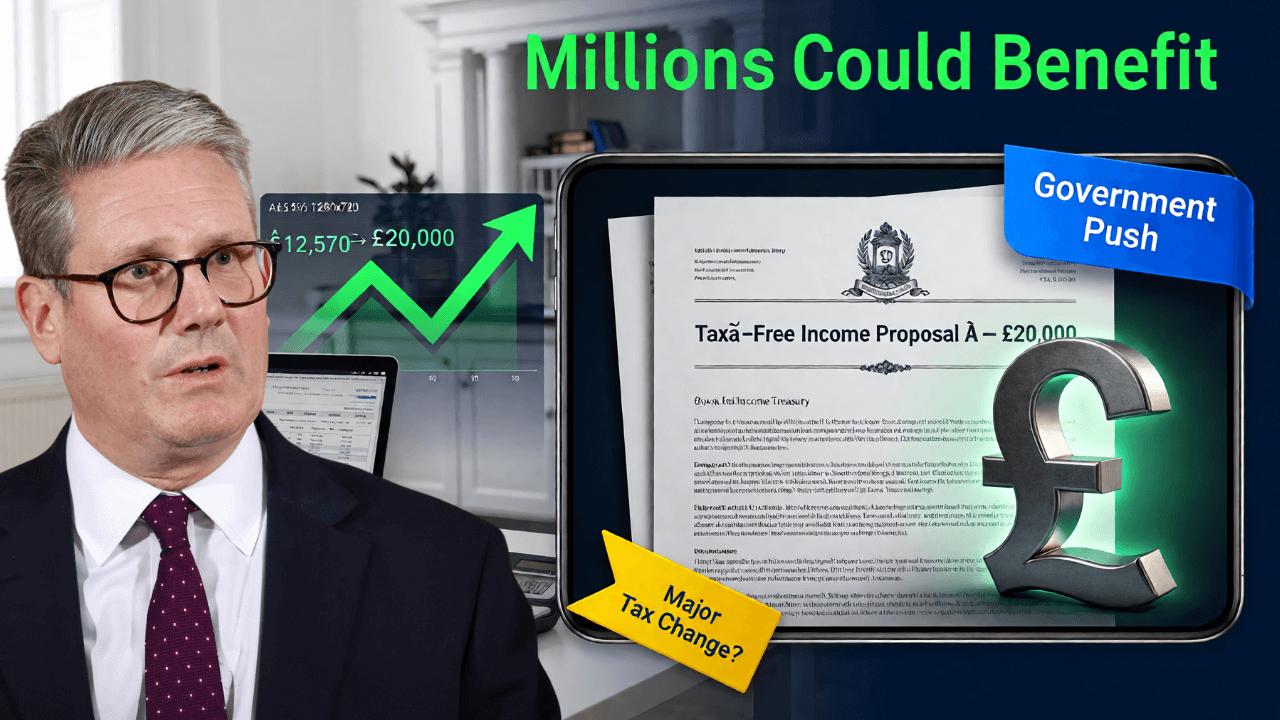
A proposal to raise the UK’s tax‑free income threshold to £20,000 is gaining serious attention, with supporters arguing it could leave millions of workers and pensioners better off each year. At the heart of the discussion is a simple but powerful idea: allowing people to earn more before paying income tax.
For many households, especially those on modest wages or fixed retirement incomes, even small tax changes can make a meaningful difference. A jump from the current £12,570 Personal Allowance to £20,000 would represent one of the biggest shifts in income tax policy in decades.
But what exactly is being proposed? Who would benefit? Is it confirmed? And what would it mean for your take‑home pay?
Here’s a clear and practical breakdown of the £20,000 tax‑free income plan and what it could mean for people across the UK.
What Is the £20,000 Tax‑Free Income Plan
The proposal centres on increasing the Personal Allowance — the amount you can earn before paying income tax — from £12,570 to £20,000.
Currently, most UK taxpayers begin paying 20% income tax on earnings above £12,570. If the threshold were raised to £20,000:
Anyone earning £20,000 or less would pay no income tax
Basic‑rate taxpayers would pay tax on a smaller portion of income
Millions could see higher take‑home pay
The Personal Allowance applies to earnings, pensions and other taxable income, making it relevant to both workers and retirees.
How the Current System Works
Under the present structure:
The first £12,570 of income is tax‑free
Income above that up to the higher‑rate threshold is taxed at 20%
Higher earnings are taxed at 40% or 45% depending on income level
The Personal Allowance has been frozen for several years. While wages have gradually risen, the tax‑free threshold has not kept pace, leading to what economists call “fiscal drag.”
Fiscal drag occurs when more of your income becomes taxable simply because thresholds stay the same while wages increase.
Why the Plan Is Being Discussed Now
There are several reasons why raising the tax‑free allowance has returned to the spotlight:
Rising living costs
Frozen tax thresholds
Pressure on household budgets
Political debate around fairness
Many argue that increasing the Personal Allowance would provide broad support without requiring separate one‑off payments.
Rather than targeted schemes, this would be a structural change affecting the tax system itself.
Who Would Benefit Most
Lower‑ and middle‑income earners would benefit proportionally the most.
For example:
Someone earning £18,000 currently pays tax on £5,430.
Under a £20,000 allowance, they would pay no income tax at all.
Someone earning £25,000 would currently pay tax on £12,430.
Under the new proposal, they would pay tax on just £5,000.
The annual saving for many could reach over £1,400 compared to the current threshold.
That level of difference would significantly increase disposable income.
What It Means for Pensioners
The proposal would also affect pensioners.
The State Pension continues to rise each year under the triple lock formula.
Some pensioners with modest private pensions are now paying income tax because the Personal Allowance has remained frozen.
If the threshold rose to £20,000:
Many pensioners would pay no income tax
State Pension income could remain fully within the tax‑free band
Administrative complexity could reduce
For retirees living on fixed incomes, the change could provide valuable breathing space.
Impact on Working Families
Working families balancing wages with rising household bills would also see direct benefits.
Higher take‑home pay could help cover:
Energy costs
Food expenses
Transport
Childcare
Unlike means‑tested benefits, a higher tax‑free threshold applies automatically through payroll systems, making it simple to implement from the taxpayer’s perspective.
Would Everyone Benefit Equally
While everyone earning above £12,570 would gain something, the largest proportional benefit would go to those earning between £12,570 and £30,000.
Higher earners would also benefit from the larger tax‑free band, but as a percentage of their income, the impact would be smaller.
The policy would not directly affect individuals earning below £12,570, as they already pay no income tax.
Interaction With Universal Credit
Some lower‑income workers also receive Universal Credit.
If take‑home pay increases due to lower income tax, Universal Credit may adjust through the taper system.
For every £1 earned above the work allowance, Universal Credit reduces by 55p.
However, even after taper adjustments, households would typically still see a net gain.
The overall effect depends on individual circumstances.
Cost to Public Finances
A key question surrounding the £20,000 proposal is affordability.
Income tax is one of the UK government’s largest revenue sources.
Raising the Personal Allowance by over £7,000 would reduce tax receipts significantly.
That revenue funds services including:
Healthcare
Education
Transport infrastructure
Social care
The proposal would therefore require either alternative revenue sources, spending adjustments or increased borrowing.
The policy would ultimately be considered by HM Treasury during the Budget process.
Is the Plan Confirmed
At present, the £20,000 tax‑free income plan remains a proposal rather than enacted law.
Changes to tax thresholds must be announced in a formal Budget and approved through legislation.
Until that happens, the Personal Allowance remains at £12,570.
Any confirmed update would include a clear implementation date, typically aligned with the start of a new tax year in April.
Political and Public Debate
Tax policy often becomes a central topic in political discussions.
Supporters of the £20,000 plan argue that:
It rewards work
It supports lower earners
It simplifies financial pressures
Critics raise concerns about:
Cost to public finances
Impact on government services
Whether targeted support would be more efficient
The debate reflects broader questions about economic priorities and long‑term fiscal strategy.
What It Means for Your Payslip
If implemented, changes would appear automatically through PAYE tax codes.
Your employer would adjust payroll systems, and your take‑home pay would increase accordingly.
You would not need to apply for anything.
The change would be reflected in monthly earnings rather than through a separate payment.
How to Prepare Financially
While no change is yet confirmed, it’s sensible to:
Monitor Budget announcements
Review your tax code annually
Understand how much income you currently pay tax on
Use official calculators to estimate potential savings
Being informed helps you plan ahead.
Could Smaller Increases Happen Instead
Rather than a sudden jump to £20,000, the government could choose to:
Gradually increase the allowance
Index it to inflation
Adjust other tax bands
Introduce targeted relief for specific groups
Incremental changes are often more politically and financially manageable.
Key Points to Remember
The current Personal Allowance is £12,570.
A £20,000 threshold is a proposal, not law.
Millions could see higher take‑home pay if implemented.
Pensioners and workers would both benefit.
Any change requires formal Budget approval.
Final Thoughts
The idea of a £20,000 tax‑free income threshold has obvious appeal. At a time when many households feel stretched, keeping more of what you earn could provide meaningful relief.
However, major tax changes come with complex financial implications. While millions could benefit directly, the broader economic impact would need careful consideration.
For now, the £12,570 allowance remains in place.
If the proposal progresses, it would mark one of the most significant shifts in income tax policy in recent memory — potentially reshaping take‑home pay for millions across the UK.
Until then, staying informed and reviewing official announcements remains the best course of action.